Hey there, I’m Julie, the Marketing Director at Harts. I’m also a homeowner and, let me tell you, I have learned a lot about my home’s systems since joining the team in 2023. Before Harts, I didn’t really know anything about home services as an industry and probably even less about plumbing, sewer, electrical and HVAC in my own home.
So, I thought I would take this opportunity to share what I have learned, specifically about sewer. Let’s get into it.
Most of what I know has come from working alongside our technicians, asking a lot of questions and having Harts work on my own home. So, from one homeowner to another, here’s what I’ve learned about sewer lines.
Plumbing Drains and Sewer Lines Are Not the Same. Who Knew?!
When you think about pipes around your home that move water and waste, you think plumbing, right? I know I did, and I’m sure a lot of people do.
Well, lemme tell ya… not quite.
The easiest way I’ve learned to think about it is this: your water-supply plumbing brings clean water into the home, your drain pipes carry wastewater away from sinks, toilets, showers and other fixtures, and your main sewer line carries that wastewater away from the house to the municipal sewer system.
The Things That Happen Inside the House (or Under It)
Let’s start inside the house.
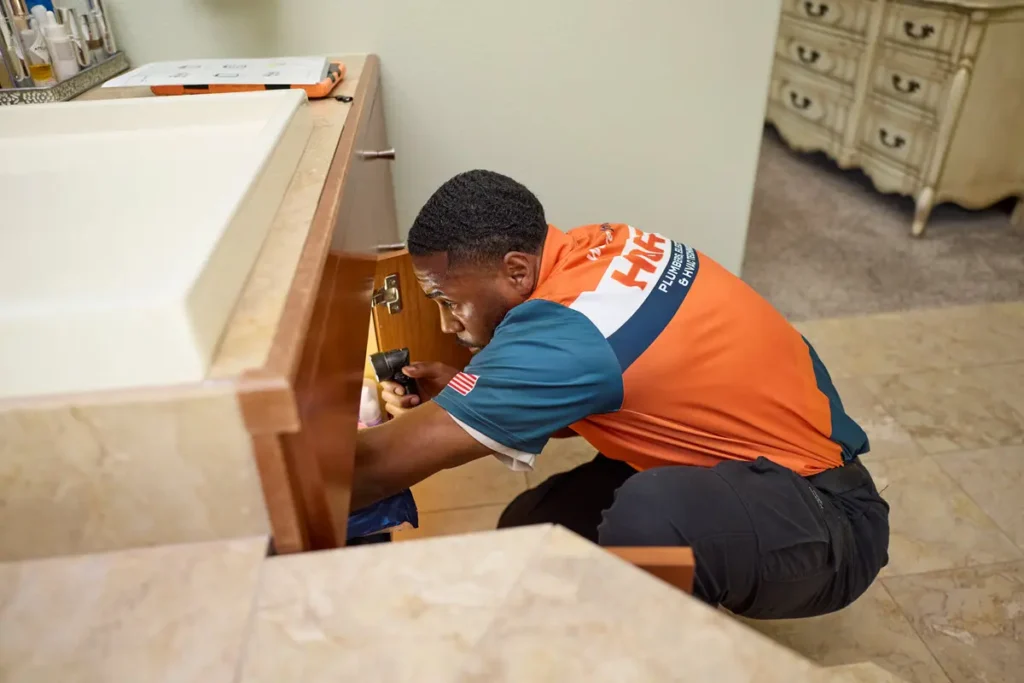
Say you have a slow or totally clogged drain in your kitchen sink, bathroom sink, shower or tub. Drain pipes become partially or totally blocked when “stuff” collects inside of them.
In the kitchen, that might be grease, food debris, soap residue and other buildup that sticks to the pipe walls over time. The buildup may happen slowly, so the sink drains more and more slowly until you really notice it.
In bathroom sinks, showers and tubs, hair and soap scum are usually going to be the main culprits.
When the problem is isolated to a single fixture or drain, professional drain cleaning or snaking can often clear the blockage and restore normal flow. Is this the exact language from the website? If so, let’s use the original.
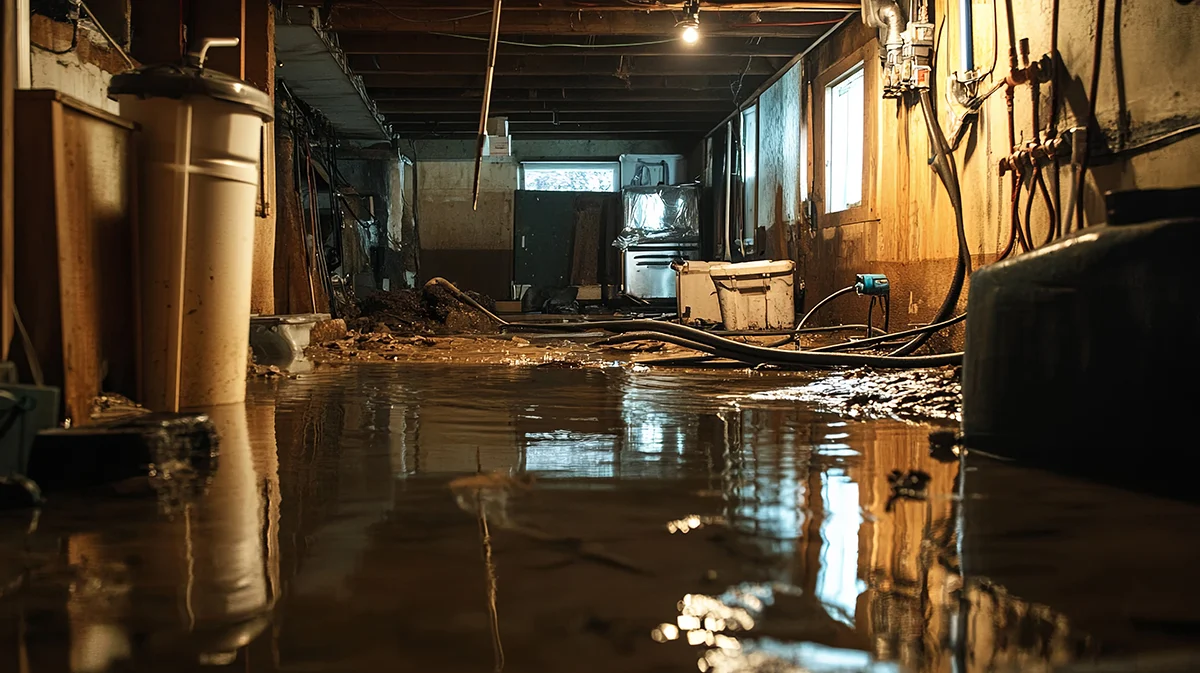
If there is a backup in a floor drain, such as a basement or garage, that may be symptomatic of a mainline blockage, which is more serious. Because they are the lowest drains in the home (drainage flows by gravity, right?), it’s more likely that wastewater will back up there.
If you notice this, take care of it right away because it could turn into a major, and majorly messy, problem.
With interior drain clogs, professional “snaking” is often one of the easiest and most cost-effective solutions.
At Harts, our technicians use heavy-duty augers to break apart whatever is clogging the drain to remove the buildup without damaging the pipes and restore normal flow.
Let’s Go Outside
If your home uses a septic system, wastewater flows into a septic tank and eventually into a drain field.
If your home is connected to a municipal sewer system, wastewater instead travels through your home’s main sewer line and connects to the city’s sewer infrastructure.
There are a lot of homeowners, myself included, who don’t know much about the main sewer line, largely because it is underground. Out of sight, out of mind, right? And when it’s operating properly, why would you think about it?
The main sewer line is a relatively large, often very long pipe that runs from your home, usually toward the street, where it connects to the municipal sewer network.
Because it’s underground, a developing problem may not be immediately obvious. Fortunately, there are a few warning signs homeowners can watch for.
Signs of a Main Sewer Line Problem
- Slow or repeatedly clogged drains. If a clog keeps coming back or multiple drains are slow at the same time, the issue may be farther down the system.
- Backups. Water or wastewater coming up through a floor drain, shower, tub or multiple fixtures at the same time can indicate a larger drainage problem.
- Gurgling sounds or foul odors. Need I say more?
- Unusual wet spots in the yard. Really specifically defined wet areas, soft ground or unexplained puddling can be worth investigating.
Seriously, if you notice several of these signs, don’t let the problem linger. Sewer issues generally don’t get easier or less expensive when they’re ignored.
What Can Block or Damage a Sewer Line?
Honestly, some of these are really obvious, and some… not so much.
Debris and Buildup
Just like debris can build up and partially or totally block the pipes in your home, it can happen in a main sewer line too.
It takes more material and often more time because the pipe is larger, but grease, food waste, soap residue and other debris can gradually accumulate inside the line and restrict flow.
Root Intrusion
Particularly during this time of year, after a relatively dry summer but before it really starts to rain, roots are looking for just about any water source they can find.
The roots can actually wrap around the pipe or work their way inside it by small cracks or gaps in joints. Once they get in, they are not interested in coming out, and they grow inside the pipe which can cause the pipe to crack or break altogether.
Sewer Belly
I had never heard this term before joining Harts.
A sewer belly is a low or sagging section of pipe where the line no longer maintains the proper slope needed for wastewater to flow efficiently by gravity.
Shifting or settling soil can cause a portion of the pipe to sink, creating that low spot. Water and waste can collect in the belly instead of flowing normally, which may eventually contribute to recurring blockages.
Cracked or Collapsed Sewer Lines
After decades of regular wear and tear, soil movement, corrosion or other damage, a main sewer line can crack or collapse.
When this happens, the overall structure of the pipe may be compromised.
Sometimes it can be repaired. In other cases, a larger section of the line or the entire sewer line may need to be replaced.
So, What Do You Do About a Sewer Line Problem?
The right solution depends on what’s actually happening underground, which is why diagnosing the problem first is so important.
First Up… Hydro Jetting
It’s basically a super high-powered pressure washer for the inside of your pipe. You’ll often hear the equipment referred to as a jetter.
Hydro jetting uses high-pressure water and specialized nozzles to break apart certain stubborn blockages while also cleaning buildup from the interior walls of the pipe.
The equipment is attached to a high-pressure hose and water supply so the technician can work through the sewer line.
Hydro jetting is the best way to get rid of stubborn clogs and even tree roots.
Spot Repairs
If the main sewer line damage is isolated to a specific area, a spot repair may be able to correct the problem without replacing the entire line.
Pipe Relining
Ok, I kinda geeked out on this one.
In some situations, an existing sewer line can be rehabilitated using cured-in-place pipe, commonly called CIPP.
A flexible liner saturated with resin is inserted into the existing pipe and expanded so it conforms to the inside of the line. Once the resin cures, it forms a new pipe surface inside the existing sewer line.
The liner can handle 90-degree bends and can conform to different shapes and sizes before it’s cured. This creates a brand new pipe that is jointless, seamless and corrosion resistant for up to 50 years!
Trenchless and Open-Trench Sewer Repair
In some cases, the sewer line can be repaired using trenchless or “no-dig” methods.
Trenchless repair can reduce the amount of excavation and disruption to landscaping, hardscaping and driveways compared to traditional open-trench work.
When the damage is extensive or the pipe has collapsed, more traditional excavation may still be required.
Sewer Line Replacement
When a repair won’t reliably solve the problem, a full sewer line replacement may be necessary.
It’s the most extensive option, but you’ll have a new sewer line and a long-term solution when the existing pipe has reached the end of its useful life.
The Good News: We Can See What’s Happening Underground
Personally, I am big on prevention. If I can do something small now that helps prevent something big later, I’m all in.
A sewer camera inspection can’t prevent every sewer problem, but it can help identify developing issues before they turn into a major backup or failure.
At Harts, a sewer camera inspection uses specialized equipment that allows our technicians to see inside the sewer line and identify what may be causing a problem.
What Happens During a Sewer Camera Inspection?
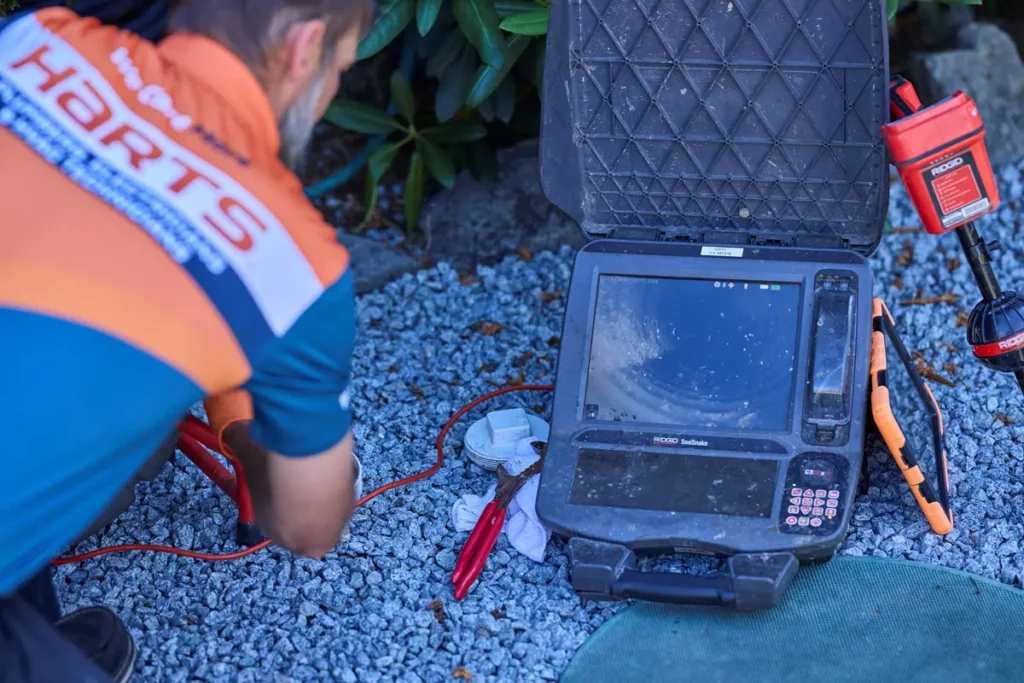
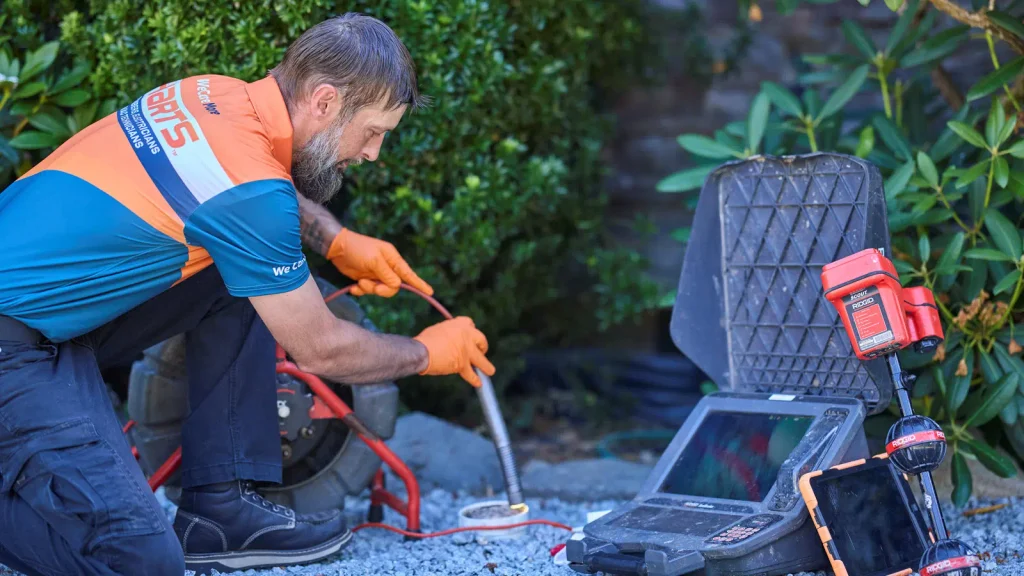
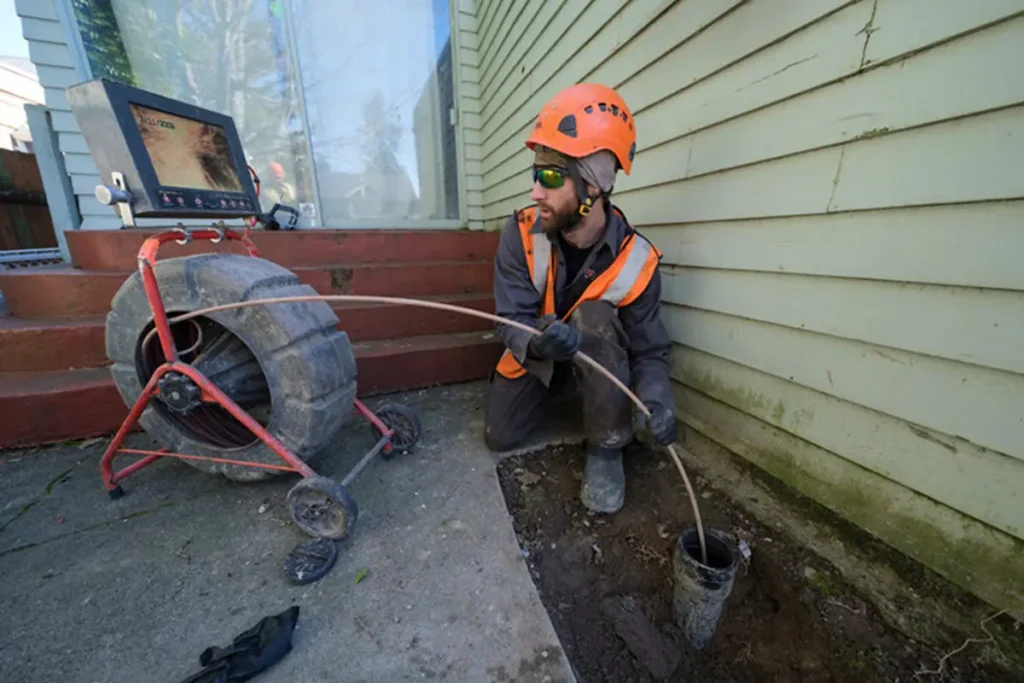
I’ll admit, I geeked out a little when I learned how this works too. A flexible camera is fed through the sewer line while the technician watches the video above ground on a G-Vision monitor. If they spot a blockage, crack, root intrusion or other problem, locating equipment can help pinpoint where that section of pipe is buried.
The inspection is recorded, giving the technician and homeowner a much clearer picture of what’s actually going on inside a pipe that would otherwise be completely out of sight.
The Locator can see exactly where the See-Snake has spotted an affected area. It guides the technician down the snake line and can take measurements in conjunction with the camera head. These three pieces of equipment allow for a quick and accurate diagnosis of the underground pipe without the need to dig.
What I’ve Learned From the Harts Team
Personally, I have had Harts to my home several times to perform maintenance and make repairs to all of my home’s systems.
I trust their expertise, but I’ve also gotten to see firsthand how much training our technicians receive on a daily, weekly and monthly basis. They know what they are doing, and one of my favorite parts is that they actually take the time to explain what they’re seeing and why it matters.
And yes, they’re also awesome with my pets, which earns major points in my book.
I am definitely more educated about my home’s systems now than I was before joining Harts, and sewer might be one of the areas where I’ve learned the most.
If you’re dealing with recurring clogged drains, wastewater backups, sewer odors or other signs that something may be happening underground, don’t wait until it becomes a much bigger mess. Give Harts a call or book online and let our sewer team take a look. We’ve got you covered.